Investing in the Grant Search
May 2013: President’s budget targets ‘cradle to career’
The president has proposed his budget, and “the budget is built around key themes that span the cradle-to-career continuum,” said US Education Secretary Arne Duncan. The goals of this experiment will not manifest a Lake Wobegon Effect as each state will utilize the largesse in their pursuit of the objectives to create the ideal STEM or Core Curriculum results for students under their auspices.
Not the “prettiest, handsomest, or most intelligent” will be sought, rather the objective is advancement in the development of the learning espoused for students “cradle to career,” catering to their discovered skills. Preschool Development Grants, funded at $750 million, will go to states that expand successful preschool programs and build capacity to implement high-quality preschool programs. High school redesign plays a large role in attempting to transform high schools into engaging learning centers that prepare students for both college and the workforce.
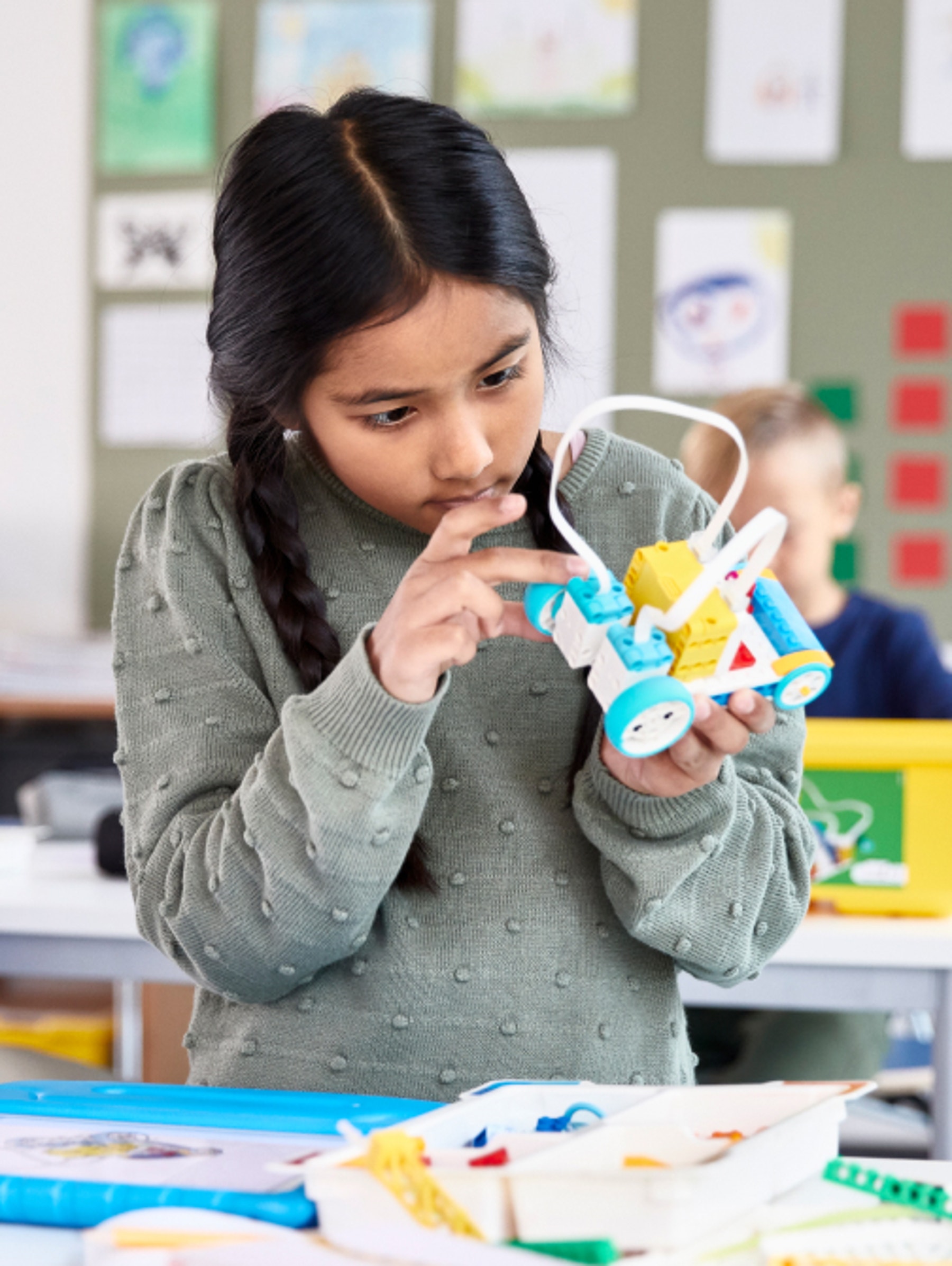
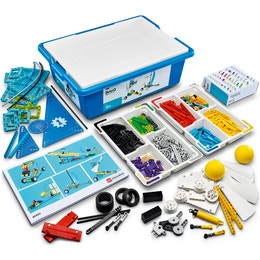
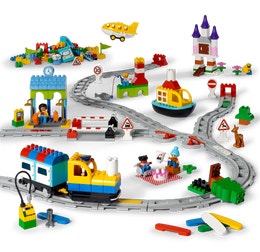
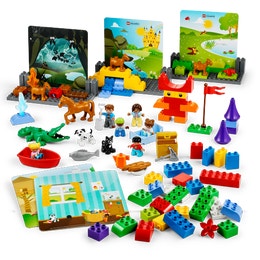
Great emphasis is continuing to be placed on giving students the opportunity to apply what they learn in the classroom to the real world. This, it is hoped, will increase student engagement and attendant graduation rates. These goals fit well with the objectives outlined in the vast majority of Pitsco Education labs and the LEGO® Education programs. If acquiring these learning materials is outside the purchasing ability of instructors, find below a listing of some potential grant sources:
May 2013 "Grant Funding Leads" (PDF)Previous issues (PDF)
April 2013March 2013
February 2013
January 2013
December 2012
November 2012
October 2012
September 2012
August 2012
July 2012
June 2012
May 2012
April 2012
March 2012
February 2012
January 2012
December 2011
November 2011
October 2011
September 2011
August 2011
Locating and Applying for Grants
Education is one of the principle funding objectives of government, private, and corporate granting agencies. The desire to create a more informed and productive citizen is paramount on the agendas of both government and private sectors. In a global environment, the more educationally astute will assume technological and economic leadership roles.
- Attendant with this concern is the strong push to enlarge the base of scientific and mathematical skills in schools to satisfy the No Child Left Behind mandates.
- School leadership may also focus on securing funding to establish programs for disadvantaged students and preschoolers.
- The horizon is alive with a variety of economic opportunities that can, when appropriately drawn together, provide greater learning opportunities for students.
- Our educational products meet many of the guidelines listed by leading grant funding sources.
Sources of Funding
Federal
These are formula grants for adult and secondary education and English as a second language.
Advanced Credentialing
A program to support teachers seeking advanced certification or advanced credentialing, this program has limited funds available.
Character Education
This grant stipulates the program is included in classroom instruction and carried out in conjunction with other reform efforts.
Charter Schools
The program provides funding for purchasing equipment, supplies, or any educational materials.
Early Childhood Professional Development
This program seeks to improve the knowledge and skills of early childhood educators who work in high-poverty areas.
Education Technology State Grant
This program has been slashed by almost 50 percent but still has a sum directed toward the effective integration of technology to ensure that students are technologically literate by the end of eighth grade.
Enhanced Assessment Grants
This is a program designed to assist in the administering of and development of accountability measures.
Gifted and Talented Students
The purpose is to serve students (particularly the economically disadvantaged, disabled, or limited English proficient) who have been underrepresented in gifted and talented programs.
Goals 2000 State Grants
These grants are awarded to assist in the improvement of K-12 education and aid educators with in-service training.
Hurricane Education Recovery Act (HERA)
The act consists of three grant programs to assist schools affected by Katrina and Rita.
- Emergency Impact Aid for Displaced Students
- Assistance for Homeless Youths
- Immediate Aid to Restart School Operations
Innovative Education State Grants
This is a formula grant under Title V that stimulates educational innovation by encouraging broad-based reform efforts. This program has been decreased by almost 50 percent for 2006. The funds may be used for technology, professional development software, or curricular materials.
Magnet Schools
These are competitive funds to enhance curriculum and attract racially diverse student populations.
Mathematics and Science Partnerships
This program encourages the formation of partnerships to improve performance in math and science. Funds may be used for professional development, summer workshops, and distance learning programs.
National Science Foundation
NSF promotes and advances scientific programs in the United States and advances grants for science, math, and engineering research in education.
Perkins Vocational and Applied Technology Act
Funds may be used for vocational and technology education activities plus professional development opportunities for teachers and counselors.
Reading First
This program provides districts assistance in setting up scientific, research-based reading programs for children in Grades K-8. Funds may be used for staff development or instructional materials.
Safe and Drug-Free Schools
This program consists of two major programs: State Grants for Drugs and Violence Prevention Programs and National Programs. State Grants is a formula grant program that provides funds to states and local school districts for a broad range of prevention and education programs. Any activity must be based on scientifically conducted research.
Small Rural School Achievement Program
These grants are very popular as they lend themselves to the extension of the No Child Left Behind objectives.
Title I
The largest of the elementary- and secondary-education programs, this program requires states to develop standards in reading and math and assessments linked to those standards for students. The program is also structured to assist high-poverty schools in giving their students an equal opportunity to meet state standards.
21st Century Community Learning Centers
This program provides money for before- and after-school sessions. Funds may be used for expanding learning activities or any area of enrichment and include technology and telecommunication education.
Private/Foundational
3M Foundation
Promotes strong curricular development and creative problem-solving skills.
Abell Foundation
Sets an agenda that allocates grants for schools, hospitals, and human service organizations and reaches out to the disadvantaged in the Baltimore community and the region.
Abington Foundation
Provides gifts for educational programs, particularly for development of these programs that stress math readiness.
Abney Foundation
This foundation supports the advancement of curriculum development.
ADC Foundation
Strong supporter of math and science programs.
Aetna Foundation
Supports strong curricular systems.
Alcoa Foundation
Funds projects that support global education, workplace skills, and safe and healthy children.
Ameren Foundation
They give their funds primarily in Missouri and Illinois. Their site lists specific efforts in which they choose to invest.
American Honda
The focus of these grants is on math, science, and technology.
Asbury-Warren Foundation
This group funds educational projects for public as well as religious schools. Their projects lean toward the Appalachian region of the country.
Bayer Foundation
Stresses the advancement of science education and a strong, reliable workforce.
Bechtel Foundation
This fund espouses the belief that a nation's strength is in the fields of science and engineering.
Berkshire Taconic Foundation
They provide funding to individuals as well as nonprofit organizations.
Braitmayer Foundation
Supports curricular reform and professional development.
Brinker International Foundation
This is a multifaceted company with a strong emphasis on educating on all levels, preschool through Grade 12.
Broad Foundation
This foundation supports a variety of educational opportunities that urban schools can create.
Cargill
Promotes the improvement of academic skills and improves the opportunities for the disadvantaged.
Carnegie Foundation
Stimulates scientific literacy and the importance of coherent communication.
Charles A. Frueauff Foundation
Funds social service organizations, education, and disadvantaged youth.
Charles Lafitte Foundation
This foundation subscribes to innovation and creativity. There is a strong investment in experiential elements for students.
Charles Stewart Mott Foundation
Goals are to improve the welfare of low-income students and to sustain the ecosystem.
Citigroup Foundation
The thrust of this foundation is to educate the next generation with a strong emphasis on the slow learner and students in the disadvantaged category, as well as a strong emphasis on ecology.
Coca-Cola Foundation
Coca-Cola strives to work with local communities to build strong educational opportunities to enhance national productivity. Most robotics and simple machines products, with their strong emphasis on math and science, would more than fill potential educational voids.
Daniels Fund
Supports early childhood readiness, school choice, teacher quality, and development of ethics and integrity. (Colorado, New Mexico, Utah, and Wyoming)
Dekko Foundation
This foundation favors requests from the states of Alabama, Indiana, and Iowa. Dekko, too, favors the early-learning and after-school programs. It is geared for preschool through age 18. The mission of any proposal must be strong and futuristic. Educational lexicon would seem to promote robotics and early-learning products as solutions to that end.
Deluxe Family Foundation
Supports education K-12, particularly science and reading.
Dollar General Foundation
Grants promote advancement of literacy and basic education.
Dominion
The funding cycle is year-round, and support is directed toward innovative educational curricula.
Dreyer's Foundation
Funds programs that show sequential, consistent core training for students.
DuPage Community Foundation
Supports programs that further the arts, culture, education, and human services.
Environmental Excellence Awards
K-12 teachers and students recognized for environmental preservation with monetary rewards.
Ewing Marion Kauffman Foundation
Sees entrepreneurship and education as the most effective ways to empower people to create their own futures. (Missouri)
Ford Foundation
Their goal is to foster education through technology and curriculum.
Frederick and Nancy DeMatteis Family Charitable Trust
The mission of the foundation is to make life better by serving human needs through support of institutions involved in education. (New York)
Frey Foundation
Seeks special teaching methods to create productive learning environments.
Gannet Foundation
Funds programs not normally covered by regular budget – only special initiatives.
Gates Foundation
Supports raising graduation rates and graduates who will be strong citizens ready for college or the workplace.
Geraldine R. Dodge Foundation
This foundation is primarily concerned with innovative instruction models and also has a strong attraction for meeting the needs of underserved students. The deadline for grant applications is November 1.
Hall Family Foundation
Supports education and the arts. (Kansas City, Missouri)
Halliburton Foundation
Endorses education K-college, supporting education in all major areas.
Humana Foundation
The aim is to develop tools to improve literacy and increase the use of technology.
Inasmuch Foundation
Funds education, health, the arts, and the environment. (Oklahoma)
Innovative State Grants
This is a formula grant under Title V which stimulates educational innovation by encouraging broad-based reform efforts. The funds may be used for technology, professional development software, or curricular materials.
Intel
This ongoing grants program can be accessed by schools in Arizona, California, Colorado, Massachusetts, New Jersey, New Mexico, Oregon, Texas, Utah, and Washington.
Joyce Foundation
Aims to provide students in the Great Lakes region with an education, allowing them to live fruitful, productive lives.
JPMorgan Chase & Co.
This group’s emphasis is toward strong progress in middle school technology.
Jubitz Family Foundation
To enhance communities by strengthening families, respecting the natural environment, and fostering peace. Early childhood development and youth education with an emphasis on children at risk.
Lilly Endowment
The endowment views education at all levels as indispensable to personal, civic, and economic success.
Lowe’s
This grant source has a variety of offerings that could be used for LEGO® initiatives as well as additions to Modules or Suites labs.
Lumina Foundation
This expands knowledge and improves practices that affect students’ access and success in postsecondary education.
M. J. Murdock Charitable Trust
The Trust's mission is to enrich the quality of life in the Pacific Northwest by providing grants and enrichment programs to organizations seeking to strengthen the region's educational, spiritual, and cultural base in creative and sustainable ways.
John D. and Catherine T. MacArthur Foundation
This group is interested in how NCLB is impacting the achievement of students.
Mary Reynolds Babcock Foundation
This foundation is concerned with the southeastern portion of the country and is seeking low-income segments to assist.
McCune Foundation
The broad mission of the McCune Foundation continues to be improving the community and enhancing the quality of life for the citizens. (Pittsburg, Pa.)
McGregor Fund
Grants to relieve misfortune and promote well-being are made in the following program areas: human services, education, health care, arts and culture, and public benefit. The area of principal interest to the McGregors is metropolitan Detroit.
Medina Foundation
The Foundation strives to improve the human condition by supporting organizations that provide critical services to those in need.
Meyer Memorial Trust
The Meyer Memorial Trust is applicable to Oregon and parts of Washington. The principal areas of interest center on early childhood and disadvantaged students.
Milken Family Foundation
Their mission is to discover and advance inventive and effective ways of helping people help themselves and those around them lead productive and satisfying lives.
Moss Foundation
The purpose of this offering is to further program goals. These grant resources could make possible the extension or refurbishment of existing Synergistic Learning Systems labs.
Motorola Foundation
Funding will focus on initiatives that creatively generate a love of science early in life and show the new generation of inventors that careers involving science and math are important, challenging, and possible. Particularly interested in getting girls involved in the study of science.
NEC Foundation
The foundation’s Web site details a variety of possible uses for funding.
Norris Foundation
Seeks better health and intellectual enlightenment for students. (primarily Southern California)
Pfizer Foundation
Seeks to raise the standard of science literacy and broaden the pool of future scientists.
Prudential
Prudential has an ongoing offer that appears to be available to all states.
RGK Foundation
This foundation gives funds to Texas institutions. The foundation is primarily attracted to humanitarian concerns and K-12 education with significant interest in literacy and any innovative additions to the educational landscape.
Richard P. Kimmel and Laurine Kimmel Charitable Foundation, Inc.
Concerned with areas of education, arts, agriculture, humanities, and human services. (Iowa, Nebraska)
Robert W. Woodruff Foundation
The foundation supports elementary and secondary education with a strong interest in science.
Roy J. Carver Charitable Trust
The grant-making activities in this area are divided into three broad categories: elementary education, secondary education, and higher education.
Sarkey's Foundation
Supports scientific and educational improvement. (Oklahoma)
Staples Foundation for Learning
The mission is to provide funding to programs that support or provide job skills and/or education for all people, with a special emphasis on disadvantaged youth.
State Farm Foundation
This group is concerned with efforts to attain educational excellence.
Sunderland Foundation
Funds arts and culture and youth-services groups. (Missouri, Kansas, Iowa, Nebraska, Arkansas)
Texas Instruments
Improve the quality of life by enhancing skills in math and science.
Toshiba Large Grants
These grants deal with math and science and appear to be oriented toward some environmental experimentation.
Toyota TAPESTRY
The Toyota TAPESTRY Grant program has an offer for K-12 science teachers. Twenty mini-grants of $10,000 each are available.
Union Pacific Foundation
Strong emphasis on civic and cultural programs. (Communities served by Union Pacific Railroad)
Verizon Foundation
Technology and literacy are areas of primary interest.
Vulcan Materials Foundation
They consider proposals from public education authorities.
W. K. Kellogg Foundation
Supports innovation and capacity to change, which leads to improvement of formal and informal education.
Wachovia
Wachovia stresses building learning environments and teacher-support systems. LEGO® MINDSTORMS® Education robotics would enhance the objectives of this foundation to reach the seemingly unreachable in the classrooms.
Walton Family Foundation
Invests heavily in education at all levels including teacher education. Wide range of options. (Arkansas, Mississippi)
Westinghouse Science and Math Grants
Places emphasis on programs in elementary and secondary schools.
William & Flora Hewlett Foundation
Purpose is to advance technology and assist Hispanic and underserved students.
William T. Grant Foundation
Supports the Foundation's mission of improving the lives of young people ages 8 to 25. Program supports intervention research to improve youth-serving organizations, such as schools and community-based organizations.
Winthrop Rockefeller Foundation
Supports economic development, education, and social justice. (Arkansas)
Woods Charitable Fund
Funds academic, community, government, business, public service, and faith-based organizations. (Lincoln, Nebraska)
Structure of the Proposal
Needs Statement/Purpose/Goals/Objectives
- This is where you build the case and provide justification of your particular need.
- The purpose is to draw the donor in and hold their attention while summarizing the salient points of the proposal. It is important to stay with the major points and repeat them frequently.
- Goals are the desired outcomes to be achieved by the end of the grant period. They are visions, so describe the benefits of those visions.
- Objectives demonstrate measurable change. These changes must not be exaggerated, and specific methods of validation should be presented. Examples could include test score improvement, attendance, scores for ESL students, or enhanced technological growth on the part of students or staff. The employed strategies and variety of methodologies utilized will explain the design and goals.
Title Page of the Requested Project
Utilize the form provided by the granting body, or if creating one of your own, incorporate the following:
- Organization name (school district/school name)
- Address, telephone, fax, and zip code
- Chief contact agent for the proposal
- Date of submission
Concise Summarization of the Proposal
Introductory paragraphs should be brief, as should the entire request. The entire proposal should be no more than two to five pages in length. Introduce your organization and its role in the world of education. Appendices can be attached to provide any additional information such as graphs and statistical validation. Take advantage of this opportunity to boast a little about past glories, yet do not denigrate the quest at hand. Thus, the introductory paragraphs – no more than two – should be precise.
- The meat of your request must be stated confidently, logically, and thoroughly while striving for an element of uniqueness to capture the immediate interest of the donor.
- Requests must be intelligible, as you cannot presuppose the reader is as familiar with the issue as you are; the reader is asked to donate, not differentiate.
- It is vital that the sum requested be announced in this early summation, as such knowledge gives the reader a road map for their evaluation of the proposal.
- The need for assistance and the solution to the problem must be clearly presented. If the request is for a Pitsco Synergistic Learning Systems lab, the financing will play differently than it would for an individual product. Therefore, the cost should be prominently mentioned.
Note: A well-written initial summary could be the major factor in acquiring a successful response.
Objectives and Beneficiaries
It is appropriate at this point to weave connections to the donor’s specific interests into your proposal and to point out potential benefits of your desired outcomes. The purpose is to draw the donor in and hold their attention while summarizing the salient points of the proposal.
- It is important to stay with the major points and repeat them frequently. Present the necessity of the project in greater detail. State measurable goals to be realized.
- A positive attitude should be evident throughout, as grantors tend to appreciate those with a “go-for-it” winning attitude.
- Detail the beneficiaries by stating the number of affected students, and note the timeline of the total process to enhance the credibility of the project. Clarification of goals and anticipated results are food for the investigative eye.
- Include measures and means to evaluate the strategies used and a measuring timeline to describe the desired outcomes. The sustainability and long-range results of the project should enhance the overall objectives of the request. The math, science, technology, and language arts influences in our products are well documented. This information is vital to funders who wish to know their contribution will make a measurable difference.
Organizational Capacity and Methods
- Scope of activities that can be achieved in allotted time
- Quality of staff engaged in the project
- Activities covered and why
- Specific recipients of the program
Describe the scope of the activities and the potential for success. The soundness of the management, creativity, and foresight of the program should be demonstrated, verifying its viability after the grant has been utilized. It is also wise to enumerate the resources that the requesting organization will add to the program to demonstrate ongoing commitment to the project. As for our organization, our history and the products’ track record demonstrate long-range durability and service.
Budget
The text of a proposal may be sincere and substantiate expected needs but still fail as a result of the compilation and presentation of the program budget. Successful projects require a narrative that specifies the expenditure of requested funds. A summary and narrative of the dispersal of those sums is vital to the reliability of the request. The cost of requested needs from staff qualifications, materials, transportation, and salaries should be considered from the initiation of the project. Keep in mind that the evaluators of your proposal are familiar with budgetary necessities and will empathize with legitimate needs. They would not appreciate surprises in the narrative. Budgetary points to address:
- Be realistic.
- Justify proposed costs.
- Make sure the amount requested is adequate.
- Include copies of previous balance information.
- Include a sample spreadsheet of budget numbers.
- Explain how costs relate to proposed activities.
- Include a budget narrative in government grant applications.
Appendix
An appendix should be included only if noted as acceptable by the funding source. In the narrative, references to the appendix may be made. Noteworthy professional references or news articles may be included in addition to a list of staff who will be guiding the project. Tables, charts, graphs, and IRS exemption information should be organized in a logical fashion. Appendix information includes the following:
- List of all items as they appear in the appendix
- Information on the board of directors, school board, superintendent, principal, and so forth
- Qualifications of individuals providing services
- Letters of support